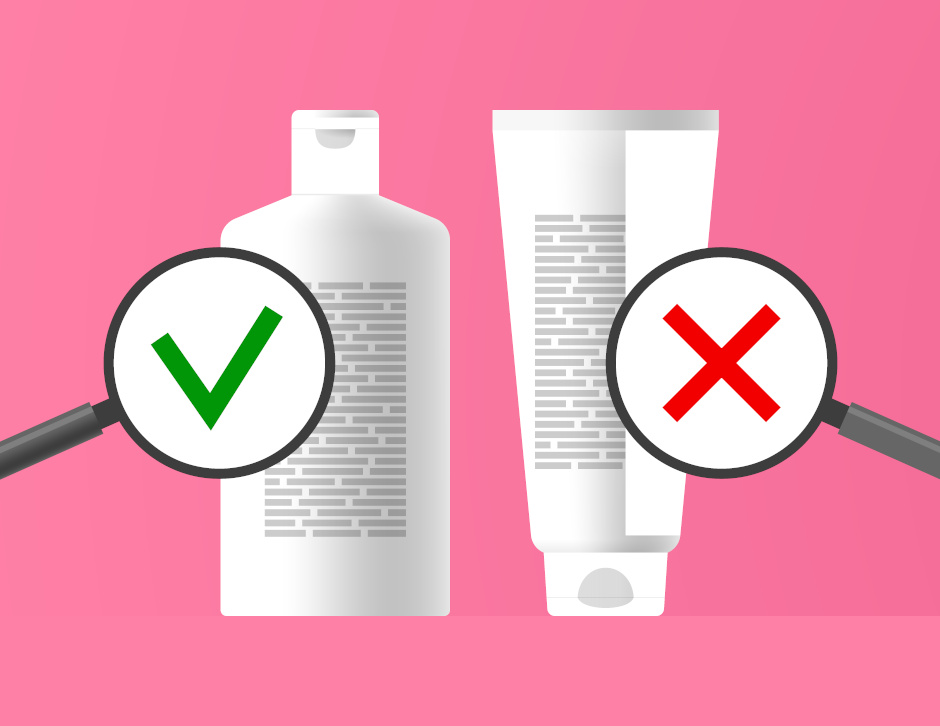
Start with ingredient order
In the EU, ingredients are listed in descending order by weight when added. Ingredients below 1% may be listed in any order after ingredients above that threshold in the formula.
Enter an ingredient name (INCI) to review its available function, category, sources and references:
Use the INCI database to search an ingredient by its INCI name and review available information on identity, function, category and references.
There are two main search methods available:
To perform a search, go to the Ingredient Search section and enter the ingredient name.
When you perform a search, you will receive ingredient information in various formats.
If you do not have a specific ingredient in mind, browse commonly used ingredients and open their information records.
Check whether the ingredient appears among substances flagged as allergens or subject to specific indications, when that data is available.
Explore colourants, CI names and fragrance-related substances. Sensitivities and reactions are individual and may require advice from a healthcare professional.
If you have a PROFESSIONAL or PRIVATE plan, you can access all features without limitations. Users without an active plan will not have access to free search but can still view the most common ingredients.
INCI is useful for understanding the declared composition of a cosmetic. Use it together with product instructions, regulatory sources and qualified professional advice when needed.
If you don’t have an active plan, you can easily subscribe to a PRIVATE or PROFESSIONAL plan to access all features, including unlimited ingredient search.
INCI stands for International Nomenclature of Cosmetic Ingredients. In the European Union, cosmetic labels must include a list of ingredients preceded by the term “ingredients”, using the names provided by the rules or a recognised nomenclature where required.
The INCI4ME database makes those technical names easier to explore. It helps users navigate names, functions and regulatory references without replacing the original label or the safety assessment of the finished product.
Three practical rules help you interpret the order and names shown on a cosmetic label.
In the EU, ingredients are listed in descending order by weight when added. Ingredients below 1% may be listed in any order after ingredients above that threshold in the formula.
Perfume and aromatic compositions may appear as “parfum” or “aroma”; colourants may use CI nomenclature and nanomaterials must be identified with “nano” in brackets.
An ingredient’s presence alone is not enough to determine cosmetic safety or suitability: concentration, formulation, intended use, exposure and regulatory conditions also matter.
Use categories as a starting point, then open an individual ingredient record for the details available.
Identify substances flagged as allergens or linked to specific labelling requirements when the information is available.
Explore colourant ingredients and CI names to understand their role and the references held in the database.
Search fragrance-related substances and distinguish the generic “parfum” entry from ingredients declared individually.
Check for references to Annexes and conditions of use under EU cosmetics legislation.
Important note: an INCI list helps explain the declared composition but cannot by itself predict individual reactions or establish the safety of the finished product. Seek healthcare advice for allergies or reactions.
In the European Union, cosmetic products must display a list of ingredients according to the rules in Regulation (EC) No 1223/2009.
INCI stands for International Nomenclature of Cosmetic Ingredients and is a nomenclature used to identify many cosmetic ingredients consistently.
INCI nomenclature is widely used internationally, but labelling requirements can vary by market. Compliance should always be checked against the rules applicable in the country of sale.
Reading the ingredient list helps you understand the declared composition and research individual INCI names.
People with known allergies or sensitivities can use the list to spot already-known substances, alongside manufacturer instructions and advice from a healthcare professional.
In the EU, ingredients are listed in descending order by weight at the time they are incorporated into the cosmetic.
Ingredients present below 1% may be listed in any order after ingredients present above that threshold in the formula.
Botanical names, CI colourant nomenclature and terms such as PARFUM, AROMA or “nano” follow specific naming conventions used by the applicable rules.
An ingredient’s position gives a qualitative indication of order but does not reveal its exact percentage.
Do not treat a position after PARFUM as proof that an ingredient is absent or ineffective: below 1% the order may vary and performance also depends on formulation and concentration.
Avoid conclusions based on a single ingredient or list position alone. Use INCI4ME to navigate the data and consult official sources or qualified professionals when needed.